


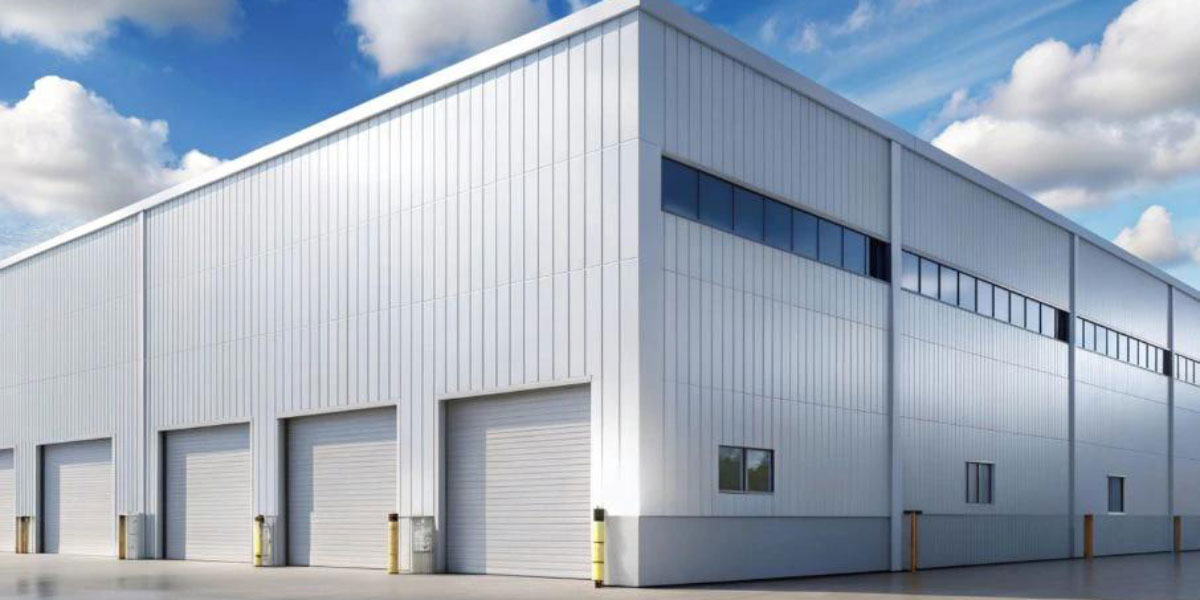
When planning a factory building, one of the most important decisions is choosing the right construction method. Two common options are Pre-Engineered Buildings (PEB) and Conventional Steel Buildings. Both are strong, durable, and widely used in industrial construction, but they differ in design, cost, speed, and efficiency. Understanding these differences can help factory owners make the right investment decision.
What is a PEB Building?
A Pre-Engineered Building (PEB) is a modern steel structure that is designed, manufactured, and pre-fabricated in a factory before being assembled at the project site. All structural components such as columns, beams, roof sheets, and accessories are made with precision using advanced software and machinery.
PEB structures are widely used for factories, warehouses, logistics parks, workshops, and commercial spaces because they are quick to install and cost-effective.
What is a Conventional Steel Building?
A Conventional Steel Building is built using standard hot-rolled steel sections and custom-fabricated structural components. Most of the fabrication, welding, cutting, and fitting work is done on-site or through separate fabrication processes.
This method has been used for decades and is suitable for projects requiring heavy load-bearing capacity or complex structural designs.
Key Differences Between PEB and Conventional Steel Buildings
1. Construction Speed
PEB buildings are much faster to complete because components are manufactured in advance and assembled quickly on-site. In many cases, factory sheds can be completed in 30% to 50% less time compared to conventional methods.
Conventional steel buildings take longer due to on-site fabrication, welding, and multiple stages of construction.
2. Cost Efficiency
PEB structures are generally more economical because they optimize steel usage and reduce labor costs. Since manufacturing happens in a controlled factory environment, wastage is minimal.
Conventional steel buildings often involve higher labor costs, more raw material consumption, and longer project timelines, increasing overall expenses.
3. Design Flexibility
PEB buildings can be customized for different spans, heights, crane systems, ventilation, mezzanine floors, and future expansion.
Conventional steel buildings are also customizable but may require more engineering effort and time for modifications.
4. Strength and Durability
Both options offer excellent strength and long life when designed properly. However, PEB structures use optimized engineering that balances strength with lightweight design, making them efficient without compromising safety.
5. Maintenance
PEB buildings usually come with coated steel, modern roofing systems, and corrosion-resistant finishes, resulting in lower maintenance costs.
Conventional steel buildings may require more frequent maintenance depending on fabrication quality and site conditions.
Which is Better for Factories?
For most modern factories, PEB buildings are the better choice because they provide:
- Faster project completion
- Lower construction cost
- Better space utilization
- Easy future expansion
- Low maintenance
- Modern appearance
Industries such as manufacturing, food processing, automotive, pharmaceuticals, packaging, and logistics increasingly prefer PEB factory sheds.
However, conventional steel buildings may still be suitable for specialized heavy industrial projects with unique engineering requirements.
Final Verdict
If your priority is speed, cost savings, efficiency, and long-term value, a PEB factory building is usually the smarter option. It helps businesses start operations faster and reduce construction-related delays.
Before choosing, consult an experienced industrial construction company to evaluate your land, load requirements, production needs, and expansion plans.